Vertical Blinds for Patio Doors: Plan the Stack and Walkway
October 27, 2026 · DBS Blinds Team · 4 min read
A patio door is both a window and a route through your home. A covering can look right when closed yet feel awkward every time someone steps outside. Before choosing a colour, think about where the open blinds will sit, which panel moves and how people approach the door.
This checklist helps you prepare for a vertical-blind consultation. It focuses on everyday access and the questions worth resolving before manufacture, rather than treating the width of the glass as the only measurement that matters.
Start with the door you actually use
Stand inside and open the patio door as you normally would. Note which panel slides, where its handle stops and which side people approach from. Include nearby furniture, a dining chair pulled out for use and anything regularly placed beside the opening.
Write down your busiest routine: carrying a tray outside, letting someone in from the garden or moving between the kitchen and patio. These details give the installer a useful starting point. A layout that works for an occasional balcony visit may feel less convenient on a doorway used many times each day.
Take a photograph of the whole wall as well as the glass. A close-up alone can hide the furniture and wall space that influence the final arrangement.
Decide where the open vanes should collect
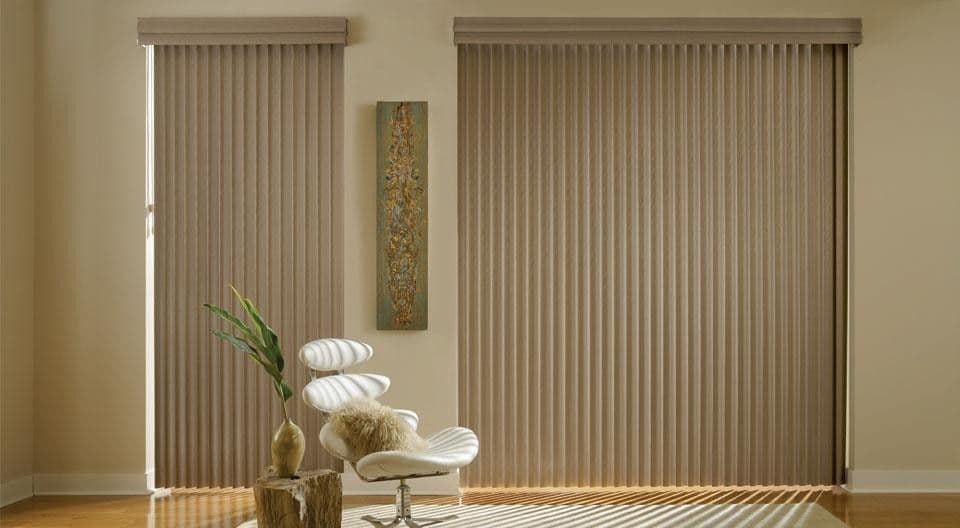
Vertical blinds move sideways along a track. When drawn back, their vanes form a stack that still occupies space. Ask to see where that stack would sit relative to the opening you walk through.
DBS offers left, right and split stacking configurations for its vertical blinds. The right choice depends on the door and room layout. Do not assume that a centre split is automatically the most convenient option because it looks symmetrical.
For example, if only one door panel is used regularly, ask whether collecting the vanes away from that panel would keep access simpler. Treat this as a layout discussion, not a universal fitting rule. The installer should confirm the available track arrangement and the space needed for the selected vanes.
Check handles, trim and the floor together
A covering needs room to operate around the door hardware. Show the consultant protruding handles, locks, deep trim and any existing curtain track. Ask them to demonstrate the intended position of the new track and the path of the vanes as they turn and move.
Look down as well. Rugs, thresholds and uneven flooring can be easy to miss when attention is on the top of the opening. Point out anything that will remain beneath the blinds, including a mat that moves when the door opens.
Avoid choosing a floor clearance from a photograph or an online rule of thumb. Have the installer specify the finished length for your actual floor and hardware. Rough dimensions are useful for an initial conversation; they should not replace the final measurements used to manufacture the covering.
Choose a material around your routine
DBS lists fabric and PVC vane options. Bring the conversation back to how the room is used: whether the doorway receives frequent traffic, whether nearby activities create splashes and what cleaning routine you can realistically maintain.
Ask to handle samples and see them against the room's finishes. A small swatch under showroom lighting may look different beside your floor, wall colour and daylight. Request the care instructions for the exact material being considered before deciding.
Also discuss what you want when the blinds are closed. Describe whether the priority is softer daylight, evening privacy or reducing a distracting view. Ask the consultant to explain the selected material's limitations, including any light around the edges, rather than assuming every vertical blind produces the same result.
Try the controls before committing
Ask for a demonstration of both turning the vanes and moving them along the track. Confirm the recommended sequence, where the control will sit and whether you can reach it comfortably without stepping behind furniture.
Tell the consultant who will use the door and whether reach or dexterity affects operation. Ask which control arrangements are available for the specific product and opening. If the demonstration feels awkward, resolve that before the order rather than hoping the habit will become easier after installation.
Bring a short brief to your estimate
Your preparation can be simple: whole-wall photographs, the normally used door panel, preferred stack location, nearby obstructions, material preferences and any operating concerns. List the questions you still need answered instead of trying to settle every technical detail yourself.
Book a free in-home estimate with DBS Blinds to review the opening and compare the available arrangements. A useful outcome is a clear plan showing where the blinds sit when open and closed, how they operate and how the doorway stays practical for your household.
Ready for a free in-home estimate?
We'll measure every window and walk you through the right product.