Choosing Roman Blinds: Fabric, Folds and Window Clearance
November 3, 2026 · DBS Blinds Team · 4 min read
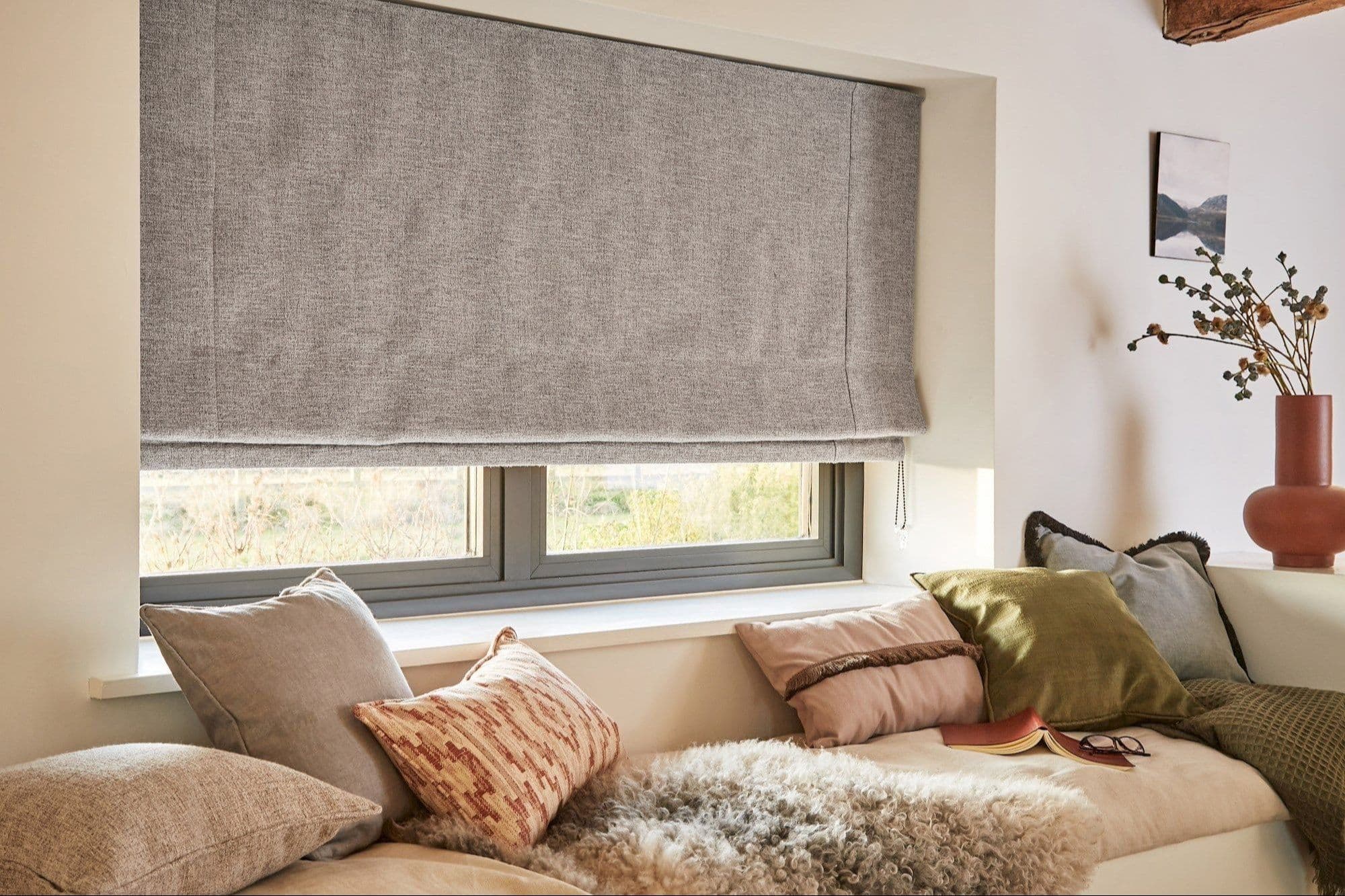
A Roman blind can look settled and simple when it is lowered, then become a prominent band of folded fabric when it is raised. That makes choosing one a room-planning decision as much as a colour decision. Before settling on a sample, think about the window in both positions and what you need to do around it every day.
For a living room, reading nook or bedroom, a useful starting point is a short brief: the look you want, when you use the room, and how much of the window you want uncovered. Bring that brief to the consultation alongside your favourite fabric ideas. It gives the discussion a practical direction before you compare finishes.
Start with the view you want to keep
Stand where you normally sit and look toward the window. Is the upper part of the glass important for daylight or a view? Would a raised shade feel visually heavy above a small opening? Take one photo from that seat and another straight on. These are useful conversation aids, not substitutes for installation measurements.
Ask the installer to show where the folded shade would sit for your chosen fabric and mounting arrangement. Do not assume that a photograph of a different window predicts the stack on yours. Note nearby cupboard doors, inward-opening windows and handles so the assessment includes access as well as appearance.
Compare the folds with the shade lowered
DBS offers flat and hobbled Roman blinds. A flat style gives a smoother lowered surface; a hobbled style keeps a layered, pleated appearance. Compare both in the position you expect to use most often, rather than choosing from a picture that shows only a fully raised blind.
If the room already has patterned wallpaper, cushions or a detailed rug, consider how another repeated pattern will fit into the whole scene. Hold the sample near those finishes, then step back. You may prefer one strong pattern and quieter supporting textures, or you may want a coordinated layered look. Neither choice needs to be decided from a tiny swatch alone.
Check fabric in your own light
Review a sample beside the actual window during the day and again under the lamps you use in the evening. Keep the wall colour and larger furniture visible while you compare. A sample photographed on a phone is helpful for remembering options, but it should not be your only colour reference.
For a large motif, ask how the pattern will be positioned and how adjacent blinds will relate to one another. Write down the fabric name and the agreed orientation rather than relying on a general description such as grey floral. If you want to supply fabric, ask DBS to assess its suitability before purchasing the quantity.
Choose the lining around the room's routine
DBS lists blackout lining as an option for Roman blinds. Discuss your light-control goal separately from the face fabric: soft daytime light for a sitting area is a different brief from reducing light in a bedroom. Ask to see the proposed fabric and lining combination, not just the decorative face.
Also ask how the mounting position and edges will affect the finished result. A blackout lining is not a promise that every part of the installed window will be light-tight. Describe specific concerns, such as a streetlight or early morning light, and request an explanation of the proposed arrangement before ordering.
Plan operation and everyday access
DBS's Roman blind range includes cordless and motorized lift options. Ask which arrangements suit the selected fabric and window. Think about who will operate the shade, whether furniture sits in front of it, and whether the chosen control will be comfortable to reach during normal use.
For a motorized option, ask about power, charging access where relevant, and the controls included in the quote. Confirm any requested smart-home compatibility rather than assuming it. For every option, ask for care instructions specific to the selected fabric and lining; avoid choosing a cleaning method based only on how another fabric behaved.
Bring a clear brief to your estimate
Make a small checklist for each window: room, preferred fold, fabric shortlist, light-control goal, mounting questions and lift preference. Add photographs of anything that might affect clearance. Ask the written quote to identify the agreed selections and installation scope so that different options can be compared fairly.
Explore DBS's Roman blinds product page for the available styles, then request a free in-home estimate to discuss your windows. The most useful outcome is a confirmed combination of fabric, fold, lining and operation that works with the room you actually use.
Ready for a free in-home estimate?
We'll measure every window and walk you through the right product.