Faux Wood Blinds for Kitchens: Splash, Reach and Care
November 17, 2026 · DBS Blinds Team · 4 min read
A kitchen window has a busy job. It brings light to a work surface, sits near washing-up or cooking, and may face a neighbour or a public path. A blind that looks right beside the cabinets still needs to work around taps, handles and the person reaching across the counter.
Faux wood blinds are worth discussing when you want adjustable horizontal slats and a wipeable surface. Before choosing a finish, walk through the window's daily routine. This guide helps you prepare a practical brief for an in-home estimate, with the final product and fitting details confirmed for your kitchen.
1. Map the splash zone and nearby equipment
Start with a photograph of the whole wall, including the sink, tap, worktop and any appliances beside the window. Point out where water splashes, where steam gathers and whether anything needs to move behind the proposed covering. A close-up of the glass alone can hide those details.
DBS describes its faux wood range as having a moisture-resistant PVC composite core. That makes it a relevant material to compare for a kitchen, but the material description does not settle every placement question. Explain the actual exposure and ask whether the proposed blind is suitable there. Have any position near cooking equipment assessed against the equipment's installation requirements; do not choose a clearance from a photograph.
2. Try reaching the controls from the floor
Stand where you normally wash dishes and imagine adjusting the blind. A deep counter or projecting tap can make a control awkward to reach. Tell the consultant if you would need to lean over equipment or move items each time. The aim is a control you can use comfortably during an ordinary day.
Ask to try both tilting the slats and raising the blind on an appropriate demonstration. DBS lists cordless options for this range; confirm availability for the actual width and installation being quoted. For a wider opening, ask whether a single blind or separate lifts would be more practical. Have the proposed arrangement explained before deciding.
3. Check daylight and privacy as separate needs
Look at the window from the work surface, dining seat and doorway. Note when direct brightness is distracting and when you want a view outside. Then describe the evening situation: which lights are on, who can approach the window and which sightlines matter. A daytime sample demonstration cannot answer every after-dark privacy question.
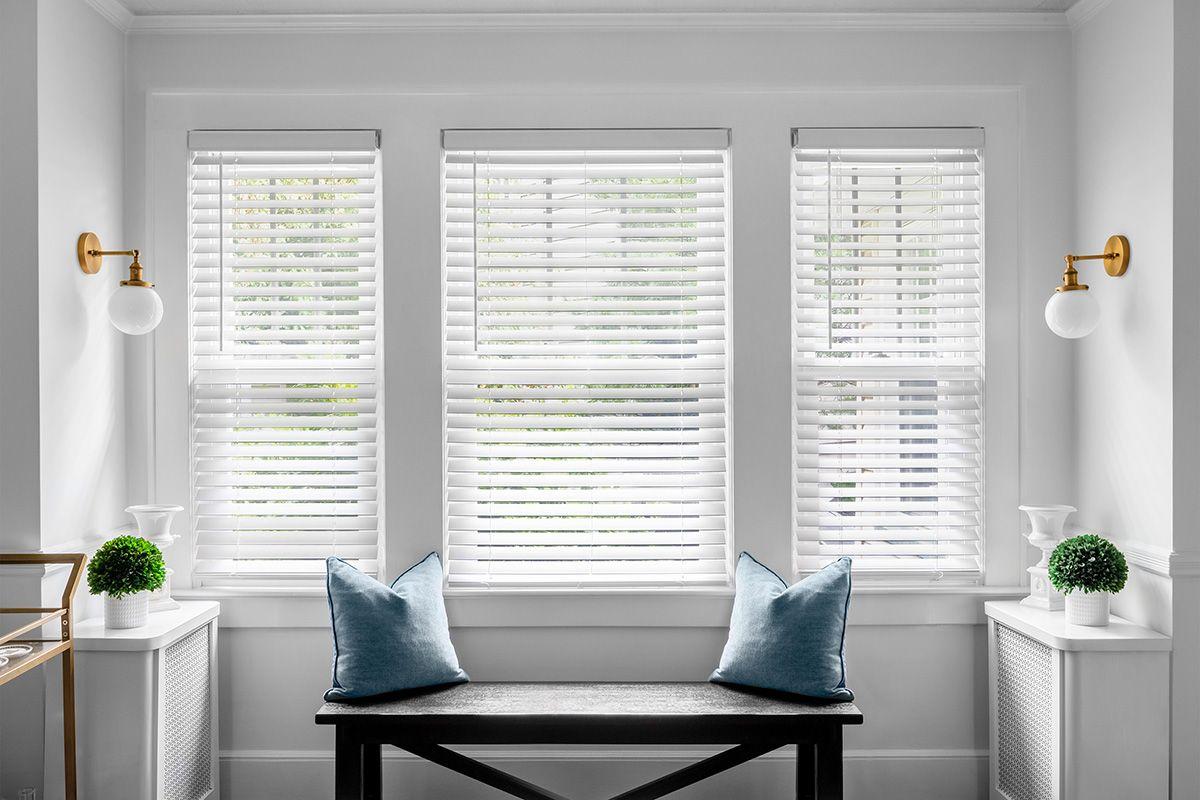
Ask to see how the two-inch slats tilt in the proposed arrangement. Discuss the view between slats, the edges of the blind and any openings around hardware. Slatted blinds should not be chosen on an assumption of complete darkness or guaranteed privacy from every angle. Explain your priority and ask the consultant to show what the selected configuration can realistically provide.
4. Compare the finish against cabinets and tiles
Bring the sample beside the cabinet doors, splashback and worktop rather than assessing it against a blank wall. Check it in daylight and under the kitchen lighting you use at dinner. White finishes can look warmer or cooler beside another white surface, while a wood-look finish introduces a more visible pattern.
Step back to see the whole window. Ask how the headrail, wand and other visible hardware will relate to the slats and trim. If a nearby dining or utility window is part of the same view, include it in the discussion so that matching colour does not become an assumption about identical fitting details.
5. Agree on a realistic cleaning routine
DBS's current faux wood care advice specifies a dry microfibre duster or a damp cloth on the slats, without oils or polish. Request instructions for the exact finish and operating system being supplied. Keep the distinction between wiping a slat and cleaning the headrail or mechanism clear; a wipeable surface is not an instruction to soak the entire blind.
Think about access before ordering. Can you reach the slats without climbing onto the counter? Can the covering be moved clear of the area you need to wipe? Ask how to support and handle the slats during cleaning, and what to do if an operating part becomes stiff. Keep those instructions with the order details.
6. Turn the walk-through into a clear estimate brief
Bring whole-wall photographs and a short list: splash exposure, reach concerns, evening privacy, preferred finish and cleaning access. Show the measuring specialist window cranks, handles, trim and anything that could obstruct movement. Treat your notes as preparation; have final dimensions and the mounting position confirmed before manufacture.
Review DBS's faux wood blinds, then request a free in-home estimate to discuss your kitchen window. Ask the written proposal to identify the selected finish, lift and tilt arrangement, mounting method and installation scope. A useful decision is one you can explain in terms of how you cook, clean and use the room each day.
Ready for a free in-home estimate?
We'll measure every window and walk you through the right product.