Choosing Zebra Blinds: A Day-to-Night Sample Checklist
November 10, 2026 · DBS Blinds Team · 4 min read
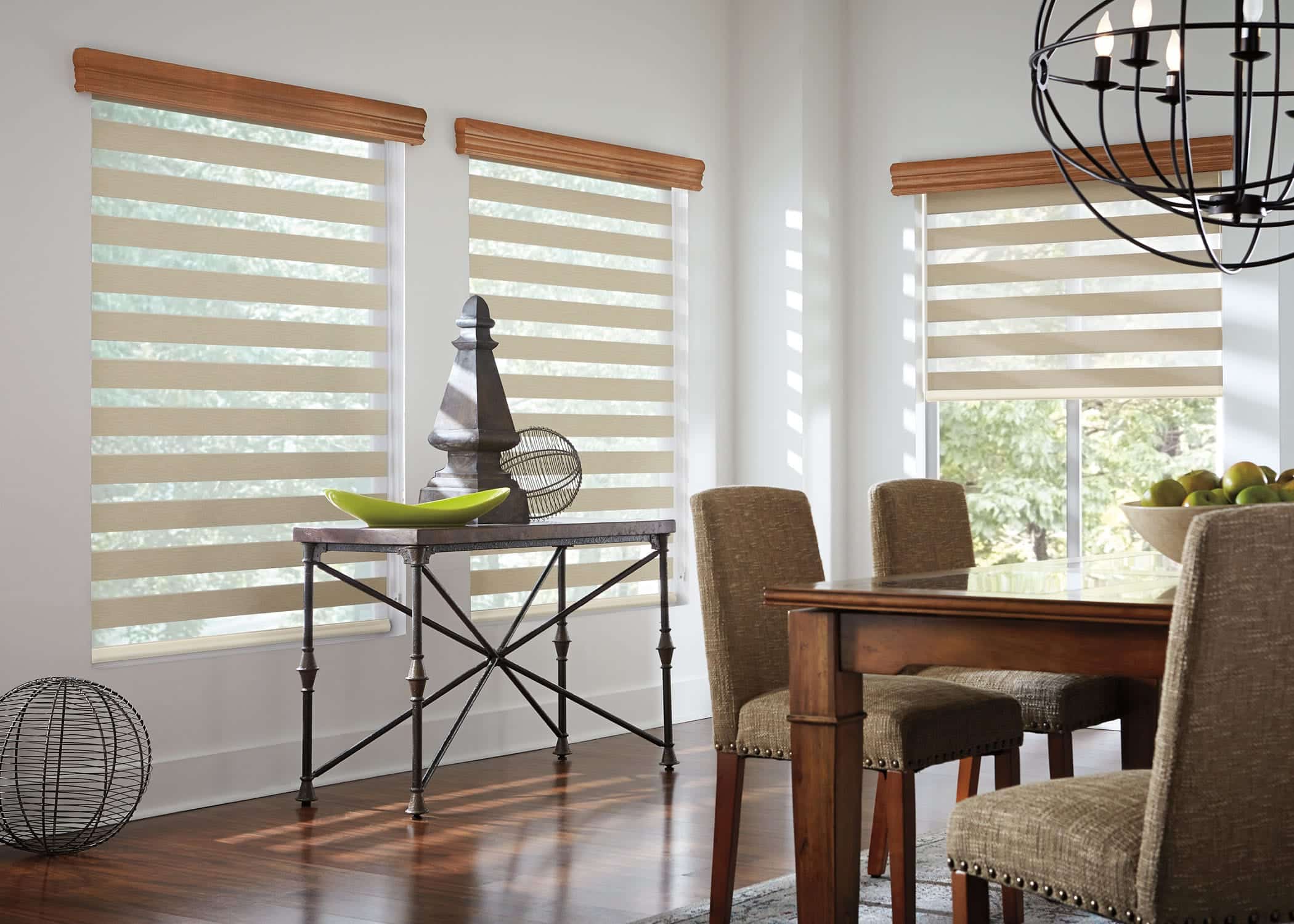
Zebra blinds can look simple in a photograph: alternating sheer and solid stripes across a window. Choosing them for your own room takes a closer look. The useful question is how the selected fabric, its closed position and the finished fit will work when you actually use that space.
Before choosing a colour, make a short list of what you need in daylight and after dark. A dining room used mainly at dinner may need a different balance from a living room overlooking a garden. Use the following checklist during your consultation to turn that list into practical sample comparisons.
1. Start with the view you want to manage
Stand at each window and note what is outside: a walkway, neighbouring windows, a street or open space. Then sit where you normally read, eat or watch television. Describe which views you want to soften and which you want to keep when the shade is in its daylight position.
Also write down when the room is busiest. Morning brightness, afternoon sun and evening lighting create different decisions. These notes help you explain the room without relying on a general request for “more privacy.” You do not need to make final measurements or choose a mounting method before discussing the options.
2. Compare the fabric in both band positions
With zebra blinds, two layers of alternating sheer and solid bands shift relative to one another. Ask to see the sample in its open, light-filtering position and in the position intended for privacy. Check how much adjustment is needed to move between them, rather than judging a swatch only while it lies flat on a table.
DBS offers standard and blackout-backed zebra fabrics, as described on its zebra-blinds product page. Compare the specific options proposed for your room. A product label alone does not show the complete installed result: fabric selection, band alignment and the edges of the covering all deserve discussion, especially if darkness is a priority.
3. Make evening privacy a separate check
Daytime appearance is only half of the decision. Tell your consultant how you light the room after dark and whether people can approach the window from outside. Ask how the selected fabric should be positioned for evening privacy and what visibility, if any, to expect through the fabric and around its edges.
Where a demonstration or sample arrangement allows it, compare the view from both sides with the room lights on. A small hand-held swatch cannot reproduce every feature of a finished window. If the demonstration leaves uncertainty, ask for a clear explanation before ordering. Keep privacy and room-darkening requirements separate so neither is assumed from the other.
4. Look at colour beside the room's finishes
Place the proposed fabric beside your wall paint, flooring and furniture. Check it against the window as well as away from direct light. A warm neutral that works with a wood dining table may look different beside cool grey cabinetry. The point is to compare the actual sample in the room, not to match a colour name from a screen.
Look at the whole stripe pattern from your normal seating distance. Texture and contrast can feel more prominent across a large window than on a small swatch. DBS's product page notes that physical swatches are brought to the home; use that opportunity to narrow the choice to fabrics you have seen in context.
5. Plan neighbouring windows together
If several windows share a wall, discuss them as a group. Ask how the headrails, bottom edges and horizontal bands will appear when the coverings are at the positions you use most. Windows of different heights or with different trim may need particular attention; do not assume that a matching fabric guarantees identical visual alignment.
Point out handles, opening sections, nearby doors and furniture that could affect access. Ask the measuring specialist to explain the proposed fit and any expected gaps. Keep your own notes as a planning aid, and have the final dimensions and mounting details confirmed before manufacture.
6. Try the operation and record your priorities
DBS lists cordless and motorized options for zebra blinds. Ask which are available with your selected fabric and window configuration, then try an appropriate demonstration. Consider who will operate each covering, where they will stand and whether a high or obstructed window is difficult to reach. Confirm any proposed controls and power arrangements for the actual order.
Finish with three written priorities, such as evening privacy, a softer daytime view and a quiet neutral colour. Add any questions the samples have not answered. Review DBS's zebra blinds, then request a free in-home estimate to compare the proposed fabric, fit and operation for your windows. A clear brief makes the final selection easier to understand and review.
Ready for a free in-home estimate?
We'll measure every window and walk you through the right product.